
Forests of Puerto Rico
Most visitors come to Puerto Rico expecting beaches, but they're often surprised to discover that nearly one-third of the island is covered by forests. In just a few hours, you can travel from the lush tropical rainforest of El Yunque to the cactus-filled landscapes of Guánica Dry Forest, then climb into cool mountain forests or explore coastal mangrove ecosystems.
These remarkable forests protect wildlife, supply fresh water, preserve endangered species, and offer unforgettable experiences for hikers, birdwatchers, photographers, and anyone who loves nature.
Puerto Rico's Forests at a Glance
Planning a visit? These quick facts highlight what makes Puerto Rico's forests unique and help you choose the best destinations for your adventure.
| Number of forests | 11 protected forests |
|---|---|
| Largest | El Yunque National Forest |
| UNESCO Site | Guánica Dry Forest (Biosphere Reserve) |
| Highest forest | Toro Negro State Forest |
| Best for hiking | Toro Negro State Forest and El Yunque National Forest |
| Best for birdwatching | Maricao State Forest and Río Abajo State Forest |
Explore Puerto Rico's Forests
Whether you're chasing waterfalls, searching for rare birds, or simply looking for a peaceful escape, Puerto Rico's forests offer an incredible variety of experiences.
| If you want to... | Visit... |
|---|---|
| Experience a tropical rainforest | El Yunque National Forest |
| Explore a desert-like landscape | Guánica Dry Forest |
| Hike mountain trails | Toro Negro State Forest |
| Go birdwatching | Maricao State Forest • Guánica Dry Forest • Río Abajo State Forest |
| Take a scenic mountain drive | Forests along the Panoramic Route (Maricao, Guilarte, Toro Negro & Carite) |
| Explore mangroves | Piñones State Forest • Aguirre State Forest |
| Capture incredible landscapes | Toro Negro State Forest • Maricao State Forest • El Yunque National Forest |
| Escape the heat | Guilarte State Forest • Toro Negro State Forest • Carite State Forest |
Puerto Rico's forests are scattered across the island, each shaped by different elevations, rainfall, and geology. Use the map above to discover where each forest is located and what makes it worth visiting.
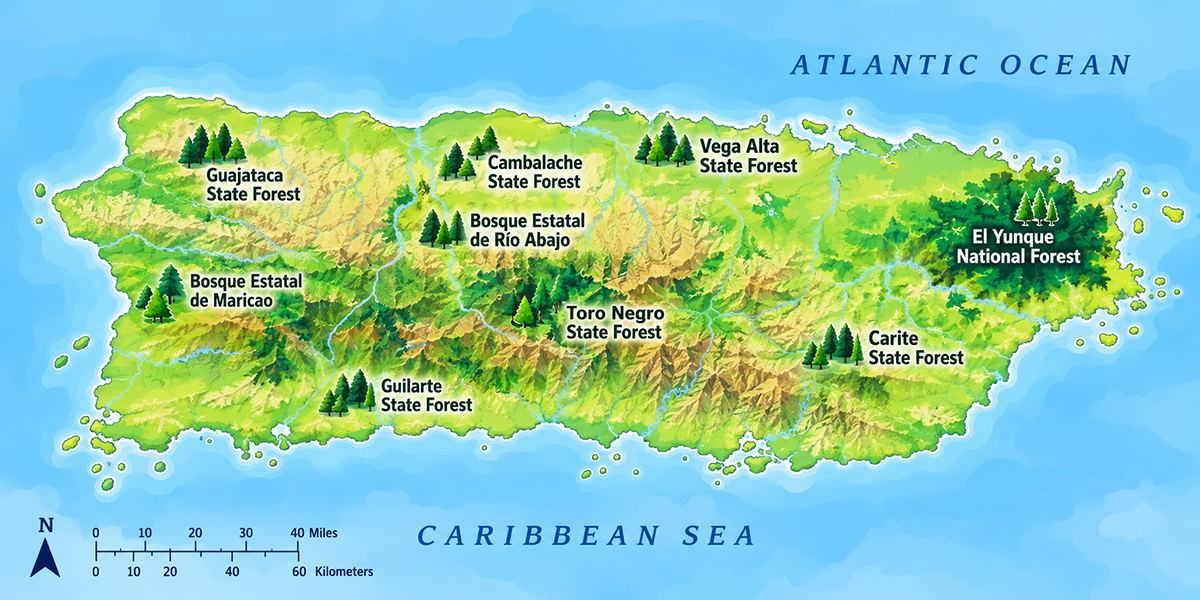
The map highlights many of the island's most important forest reserves. In the northeast lies El Yunque National Forest, the only tropical rainforest in the U.S. National Forest System and one of Puerto Rico's most visited natural attractions.
Across the island, other protected forests include Toro Negro, Maricao, Carite, Río Abajo, Guajataca, Cambalache, and Guilarte, each preserving unique ecosystems ranging from limestone karst landscapes to cool mountain forests along the scenic Panoramic Route.
Together these forests illustrate the incredible biodiversity of Puerto Rico and provide unforgettable experiences for hikers, birdwatchers, photographers, and nature lovers.
Puerto Rico's Forest Regions
Puerto Rico's forests are incredibly diverse because of the island's changing elevations, rainfall patterns, and geology. As you travel across the island, you'll experience completely different ecosystems—each with its own landscapes, wildlife, and outdoor adventures.
Northeast Region
El Yunque National Forest (Bosque Nacional del Caribe)
The most famous forest in Puerto Rico is El Yunque National Forest, located in the Sierra de Luquillo mountains in northeastern Puerto Rico. Covering nearly 28,000 acres, it is the only tropical rainforest in the U.S. National Forest System. Towering trees, waterfalls, rivers, scenic overlooks, and hundreds of plant and animal species make it one of the island's most visited natural attractions.
El Yunque receives more than 200 inches of rainfall each year, creating a lush ecosystem filled with rivers, waterfalls, and dense tropical vegetation.
Located in Río Grande and Luquillo, less than an hour from San Juan, El Yunque is one of the island's most accessible and popular natural attractions.
Visitors can explore:
- Scenic hiking trails and waterfalls
- Over 240 species of trees and plants
- Dozens of bird species and rare wildlife
- The famous coquí frog, a beloved symbol of Puerto Rico
Don't Miss: La Coca Falls, Yokahú Tower, Mt. Britton Trail, El Portal Visitor Center.
Central Mountains
These forests form Puerto Rico's mountainous backbone and offer cooler temperatures, rivers, waterfalls, panoramic views, and some of the island's best hiking opportunities.
Toro Negro State Forest
Home to some of Puerto Rico's highest peaks, Toro Negro offers rugged mountain scenery, rivers, waterfalls, observation towers, and excellent hiking. Its cool climate makes it a refreshing escape from the coast.
Located in the municipalities of Orocovis, Jayuya, Ciales, Juana Díaz, and Ponce, Toro Negro State Forest is home to some of Puerto Rico's highest peaks and most spectacular mountain scenery.
Carite State Forest
Known for its peaceful mountain landscapes, Carite protects rivers, reservoirs, and cloud forests while offering hiking, camping, and birdwatching opportunities just south of San Juan.
Guilarte State Forest
Located in Adjuntas along Puerto Rico's scenic Panoramic Route, Guilarte State Forest is known for its peaceful mountain landscapes, hiking trails, and breathtaking views of the island's central mountains.
Maricao State Forest
Located in the municipalities of Maricao and Sabana Grande, Maricao State Forest is known for its cool mountain climate, lush cloud forests, and exceptional birdwatching. Visitors can enjoy scenic drives, hiking trails, and breathtaking views of Puerto Rico's coffee-growing highlands.
Northern Karst Region
The forests of northern Puerto Rico grow across dramatic limestone hills filled with caves, sinkholes, underground rivers, and unique wildlife.
Río Abajo State Forest
Located between Arecibo and Utuado, Río Abajo State Forest protects one of Puerto Rico's most important conservation areas, Río Abajo protects the island's karst ecosystem and plays a vital role in the recovery of the endangered Puerto Rican Parrot.
Cambalache State Forest
Located in the municipalities of Arecibo and Barceloneta, Cambalache State Forest is one of Puerto Rico's most accessible forests, offering easy walking trails, picnic areas, and peaceful woodlands just minutes from the island's northern coast.
Guajataca State Forest
Located in northwestern Puerto Rico between Isabela, Quebradillas, and San Sebastián, Guajataca State Forest is known for its dramatic limestone landscapes, peaceful hiking trails, and rich biodiversity. Guajataca offers hiking trails, caves, sinkholes, and beautiful forest scenery that attracts both hikers and birdwatchers.
- Limestone caves and karst formations
- Scenic hiking trails
- Excellent birdwatching opportunities
Coastal Mangrove Forests
Puerto Rico's mangrove forests protect shorelines while providing habitat for countless marine species and migratory birds.
Piñones State Forest
Located along Puerto Rico's northeastern coast in Loíza, Piñones State Forest protects one of the island's largest mangrove ecosystems. Visitors can explore scenic boardwalks, enjoy birdwatching, cycle along the coast, and experience the natural beauty that surrounds the famous Piñones beaches and kiosks.
Aguirre State Forest
Located along Puerto Rico's southern coast in Salinas, Aguirre State Forest protects one of the island's largest mangrove ecosystems, providing critical habitat for migratory birds, marine life, and countless coastal species.
Southwestern Dry Forest
Guánica State Forest
Located along Puerto Rico's southwestern coast in Guánica, this UNESCO Biosphere Reserve is one of the world's best-preserved tropical dry forests, this UNESCO Biosphere Reserve, Guánica is one of the world's finest examples of a tropical dry forest. Instead of waterfalls and lush vegetation, you'll find giant cacti, coastal cliffs, dry woodlands, and some of Puerto Rico's best birdwatching.
Highlights include:
- Over 700 plant species
- Nearly 50 endangered species
- One of the best birdwatching destinations in Puerto Rico
- Scenic hiking trails
- Coastal viewpoints
Río Abajo State Forest
Located between Arecibo and Utuado, Río Abajo Forest protects an important karst ecosystem and supports conservation programs for the endangered Puerto Rican parrot.
Piñones State Forest
Just east of San Juan, Piñones protects coastal mangrove ecosystems that are vital for marine life and wetlands.
Visitors often enjoy:
- Kayaking through mangroves
- Cycling along coastal trails
- Wildlife viewing
Why Puerto Rico's Forests Matter
Puerto Rico's forests are much more than beautiful places to explore. Every hike, scenic drive, or wildlife encounter is possible because these protected landscapes quietly sustain the island in countless ways.
They Protect Our Water
Forests capture rainfall that feeds rivers, reservoirs, and waterfalls—including many of the places visitors come to enjoy.
They Protect Wildlife
Many of Puerto Rico's most iconic animals—including the coquí frog and the endangered Puerto Rican Parrot—depend on healthy forests to survive.
They Preserve Biodiversity
Thousands of native plants thrive in Puerto Rico's forests, many found nowhere else on Earth.
They Invite Adventure
Whether hiking to waterfalls, birdwatching, mountain biking, or simply enjoying cooler mountain temperatures, Puerto Rico's forests offer some of the island's best outdoor experiences.
They Protect the Future
Healthy forests help prevent erosion, improve water quality, capture carbon, and preserve these extraordinary landscapes for future generations.
My Favorite Forest Experiences
Growing up in Puerto Rico, I always thought the beach was where the island's beauty truly shined. But the older I've become, the more I've fallen in love with its forests. Standing beneath a waterfall in El Yunque, driving the winding roads of the Panoramic Route, listening to the coquí at sunset, or hiking through the quiet trails of Toro Negro reminds me that Puerto Rico's greatest treasures aren't always found along the coast.
Every forest has its own personality. Some are cool and misty, others dry and rugged. Together, they tell the story of an island whose beauty extends far beyond its beaches.
Local Tips
Start Early
You'll enjoy cooler temperatures, easier parking, and the best chance to spot wildlife.
Bring a Light Rain Jacket
Rain can appear quickly in El Yunque and the central mountains, even on sunny days.
Wear Hiking Shoes
Many trails include rocks, tree roots, and muddy sections.
Download Maps Before You Go
Cell service can be limited in remote mountain forests.
Pack Water and Snacks
Some forests have limited visitor services.
Leave Nature Undisturbed
Stay on marked trails and leave plants, rocks, and wildlife exactly as you found them.
Did You Know?
More than 50% of Puerto Rico's total exports are in the pharmaceutical sector.
Get Our Newsletter
Discover new places, local flavors, upcoming events, cultural stories, and some of our favorite finds from around the island.Read the Latest ¡La Isla! Newsletter
Follow Along


