
Puerto Rico's Three Bioluminescent Bays
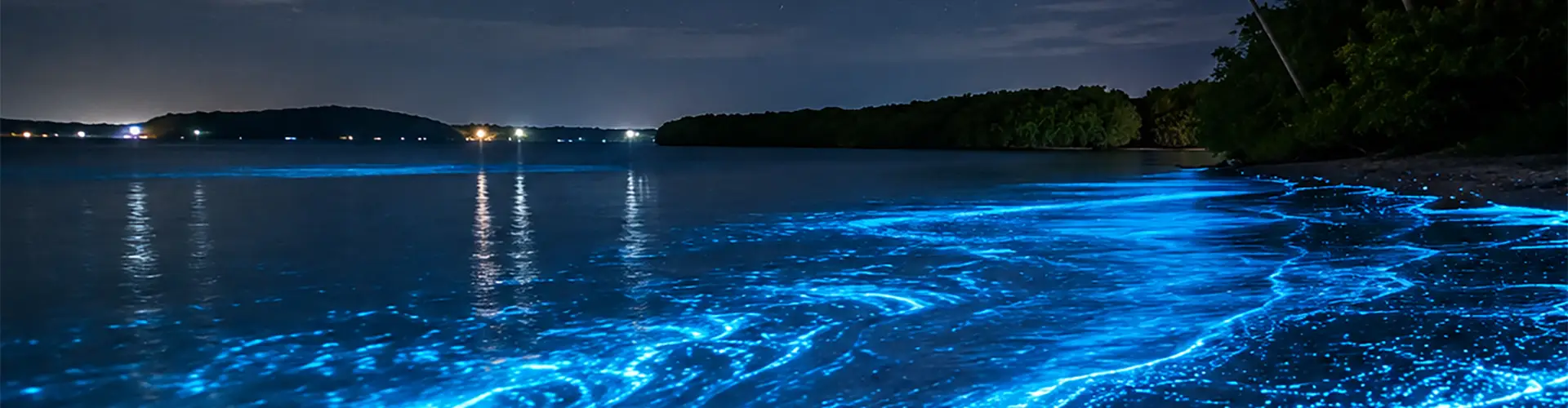
Witness waters that glow electric blue with every movement—a rare natural phenomenon found in only a handful of places worldwide, with Puerto Rico home to the three brightest.
Why Puerto Rico?
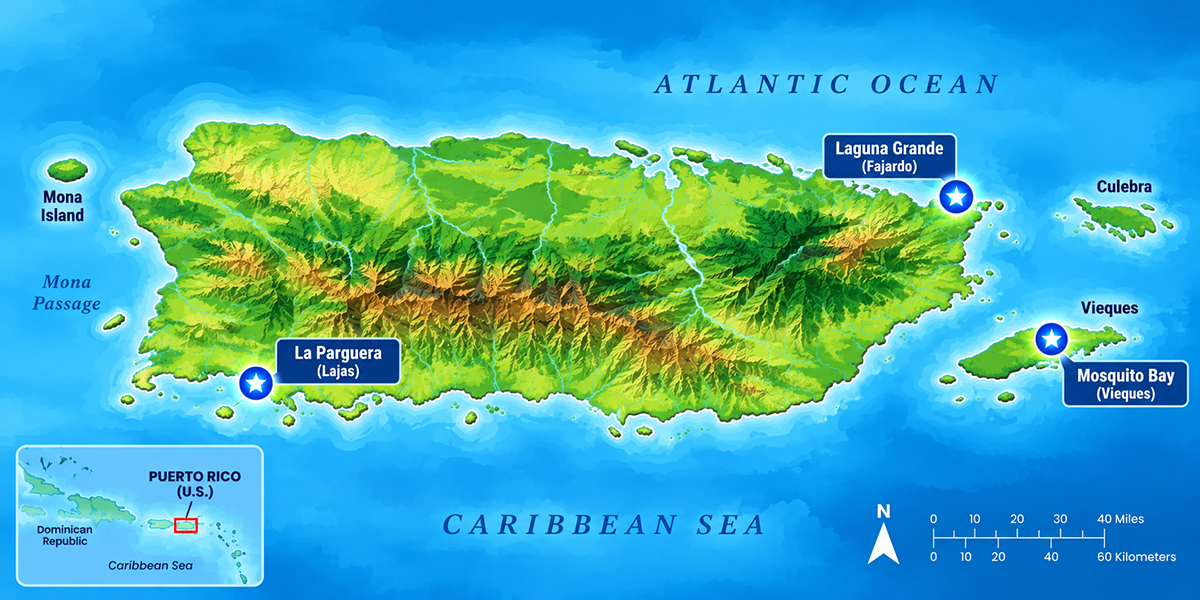
Of the five year-round bioluminescent bays in the world, three are in Puerto Rico. This isn't coincidence—it's geography, ecology, and fortunate isolation working together. These rare natural wonders create a breathtaking glow-in-the-dark experience that every visitor should witness at least once. Located in Mosquito Bay, Laguna Grande and La Parguera. The other two are located in Luminous Lagoon in Jamaica and Halong Bay in Vietnam.
What is a Bioluminescent Bay?
A bioluminescent bay (bio bay) is a body of water that glows at night due to the presence of dinoflagellates, single-cell marine plankton that emit a blue-green light when disturbed.
What Creates the Glow?
The mesmerizing blue-green glow comes from microscopic single-celled organisms called dinoflagellates (scientific name: Pyrodinium bahamense). When disturbed by movement—a paddle stroke, a fish swimming by, or even a hand moving through the water—these tiny organisms produce light through a chemical reaction as a defense mechanism.
The brightness of a bio bay depends on:
- Water temperature
- Moon cycle & darkness of the night
- Water currents & salinity
- Ecological conditions & mangrove health
The best time to visit is during a new moon, when the darkness enhances the glowing effect.
Where Are Puerto Rico's Bioluminescent Bays Located?
Each bay offers a unique experience—from the world's brightest to the most accessible.
Mosquito Bay
Vieques Island
Located on the island of Vieques, east of the coast of Puerto Rico.
This bay is the brightest and
best-known bioluminescent bay in the world, it has the highest concentration of dinoflagellates, ranging from 700,000 to 2,100,000 per gallon of water, creating an unmatched glow.
Recognized in 2006 as the brightest bioluminescent bay in the world.
Best Way to See It: Clear-bottom kayaking tours.
Access: Ferry to Vieques + guided tour required
- Guinness World Record holder - brightest bio bay
- ~1 million dinoflagellates per liter
- Best on new moon nights (darkest skies)
- Kayak or electric boat tours available
- Strictly protected ecosystem
Laguna Grande
Fajardo (East Coast)
Located on the northeastern part of Puerto Rico, in Fajardo. This mangrove-surrounded lagoon offers a mystical, glowing experience and is easily accessible from San Juan. Swimming is not allowed, but kayaking tours provide an up-close experience.
Best for travelers: who want a short trip from San Juan.
Access Direct access from mainland Puerto Rico
- Most accessible from San Juan (45 min drive)
- Beautiful mangrove tunnel entrance
- High dinoflagellate concentration
- Family-friendly tours available
- Year-round visibility
La Parguera
Lajas (Southwest Coast)
Located southwestern part of Puerto Rico, in the town of Lajas. Unlike Mosquito Bay and Laguna Grande, swimming and snorkeling are allowed here. Boat tours available, making it a great choice for families and larger groups.
Best for those looking for a more interactive experience.
Access: Boat tours from La Parguera village
- Only bio bay where swimming is possible
- Charming fishing village nearby
- Boat tours from La Parguera village
- Combine with seafood dinner
- More variable brightness levels
Essential Visitor Tips
Make the most of your bioluminescent bay experience.
New moon (darkest nights) produces the most dramatic displays. Avoid full moon periods when possible. Avoid rainy days, heavy rain can dilute the water's salinity, temporarily reducing brightness.
Wear quick-dry clothes, water shoes, and bring insect repellent. You will likely get wet while kayaking.
Use only biodegradable sunscreen (or none). Avoid touching the water unnecessarily. Follow all guide instructions.
Tours fill up quickly, especially during peak season (December-April) and new moon periods. Reserve 1-2 weeks ahead.
The glow appears blue-green to the naked eye, not the bright neon blue often seen in long-exposure photos.
Turn off all lights. Let your eyes adjust. The darker it is, the more spectacular the bioluminescence appears.
Featured Tours
How to Visit Responsibly
To help protect Puerto Rico's bio bays and ensure future generations can enjoy them:
- Choose Eco-Friendly Tours - Look for operators that use clear-bottom kayaks or electric boats.
- Avoid Sunscreen & Bug Spray - Even reef-safe products can harm the fragile dinoflagellates.
- No Flash Photography - The glow is best captured with long-exposure settings on cameras.
- Do Not Touch the Water (except in La Parguera) - Preserving the ecosystem is key to maintaining the bio bays' magic.
- Swimming is not allowed in Mosquito Bay and Laguna Grande; you can swim and snorkel in the bay at La Parguera. Remember to plan and book your tour around the moon cycle, the darker the night, the brighter the bioluminescence.
Recommended Bioluminescent Bay Tours
Here are some reliable tour operators offering kayaking and boat trips to Puerto Rico's bio bays:
Fajardo (Laguna Grande)
- Kayaking Puerto Rico - (787) 435-1665 | (787) 245-4545
- Pure Adventure - (787) 202-6551 | (787) 314-4347
- Island Kayaking Adventures - (787) 444-0059
- Peniel Access Eco Tours - (787) 463-1940
Vieques (Mosquito Bay)
- Yokahu Kayak Trips - (787) 604-7375 | (787) 863-5374
- Las Tortugas Adventures - (787) 809-0253 | (787) 637-8356
Lajas (La Parguera)
- Eco Action Tours - (787) 791-7509 | (787) 640-7385
Tour Prices: Range from $45 to $135 per person, depending on location and tour type (kayaking vs. boat).
Other Resources
Traveling to Puerto Rico? Get the Puerto Rico (National Geographic Adventure Map), includes locations of airports, harbors, anchorages, ferry routes, and toll plazas take the guesswork out of travel around the islands. Visitor centers are also marked for travelers seeking additional resources.
Did You Know?
Puerto Rico manufactures many pharmaceuticals used in the U.S.
Get Our Newsletter
Discover new places, local flavors, upcoming events, cultural stories, and some of our favorite finds from around the island.Read the Latest ¡La Isla! Newsletter
Follow Along


