
Caves and Caverns
Puerto Rico's Underground World
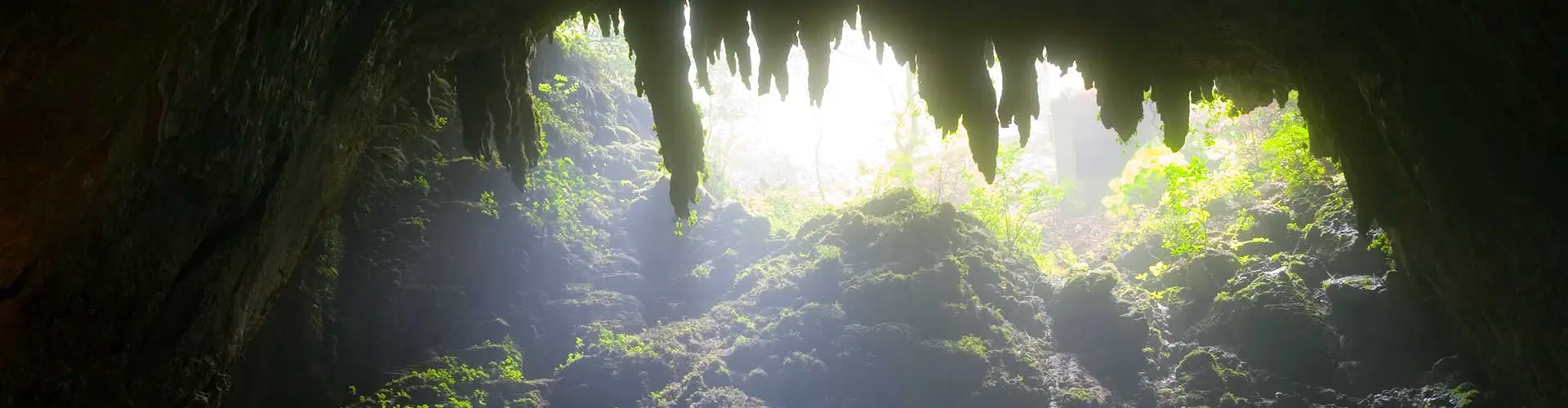
Puerto Rico is home to one of the Caribbean's most spectacular underground landscapes. Carved over millions of years through the island's limestone formations, hundreds of caves, sinkholes, and underground rivers invite visitors to discover a hidden world of towering chambers, ancient Taíno history, and unforgettable adventure.
Many of these caves were once used by the Taino people, whose petroglyphs can still be seen carved into the rock walls. Today they offer visitors a unique opportunity to explore Puerto Rico's natural beauty, geological history, and ancient heritage.
Some caves are easily accessible through guided tours, while others attract adventure seekers interested in spelunking, rappelling, and underground exploration.
Puerto Rico's Caves at a Glance
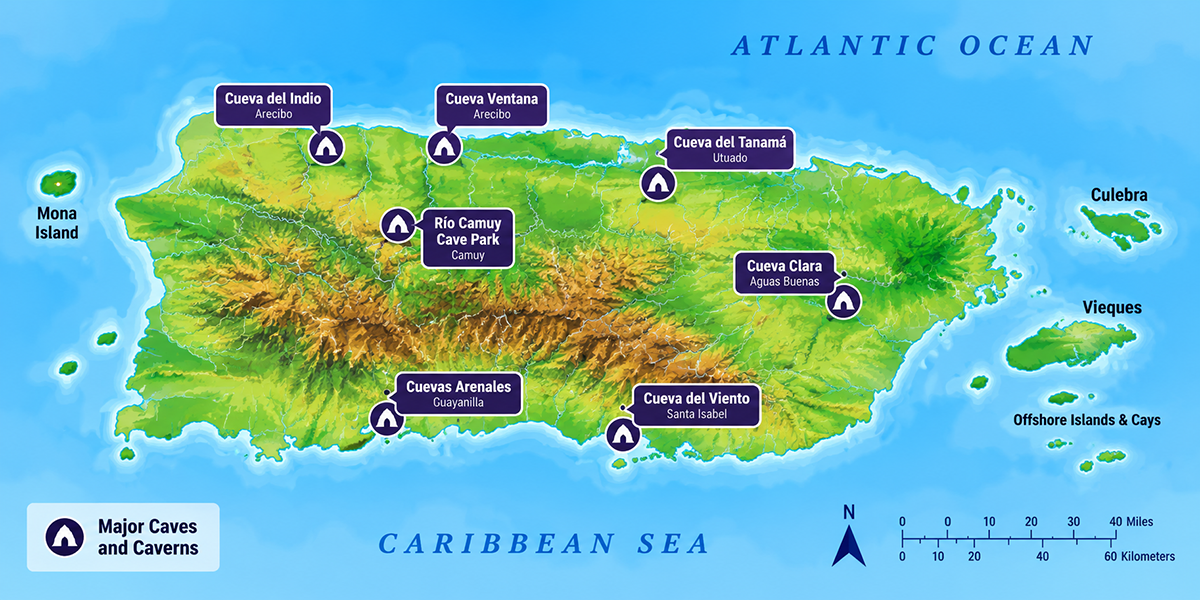
These quick facts provide a snapshot of the island's most notable caves, underground landscapes, and visitor experiences.
| Largest cave park | Río Camuy Cave Park |
|---|---|
| Most photographed | Cueva Ventana |
| Known for petroglyphs | Cueva del Indio |
| Best for adventure | Cueva Clara and the Tres Pueblos Sinkhole |
| Main geological region | Northern Karst Region |
| Famous underground river | Río Camuy |
Explore Puerto Rico's Caves
Whether you want to discover ancient Taíno history, photograph dramatic landscapes, or venture underground, Puerto Rico offers cave experiences for many interests and comfort levels.
| If you want to... | Visit... |
|---|---|
| Explore an extensive cave system | Río Camuy Cave Park |
| Capture panoramic views | Cueva Ventana |
| See ancient petroglyphs | Cueva del Indio |
| Go spelunking or rappelling | Cueva Clara and the Tres Pueblos Sinkhole |
| Observe cave wildlife | Río Camuy and Cueva del Infierno |
| Take a guided cave tour | Río Camuy Cave Park or Cueva Ventana |
Featured Cave Systems
Río Camuy Cave Park
One of Puerto Rico's most famous natural attractions, Río Camuy Cave Park (Parque Nacional de las Cavernas del Rio Camuy) protects part of one of the largest cave networks in the Western Hemisphere.
The Río Camuy, considered one of the world's largest underground rivers, flows beneath the limestone landscape forming enormous caverns and dramatic sinkholes.
Visitors can explore impressive formations including:
- Impressive stalactites & stalagmites
- Deep sinkholes & caverns, some over 200 feet (60 meters) deep
- Rare cave-dwelling species, including bats, cave crickets, and blind fish
- Ancient Taino petroglyphs, carved into the cave walls, offering a glimpse into Puerto Rico's indigenous history
Guided tours take visitors into spectacular chambers such as Cathedral Cave and Clara Cave, where a giant sinkhole opens to the sky above.
- Location: Near Lares and Camuy, on Route 129, Km 9.8
- Hours: Wednesday - Sunday
- Admission: $18 for adults, $13 for children (prices may vary)
- Contact: (787) 898-3100
Cueva del Infierno
Located near the Río Camuy cave network, Cueva del Infierno is part of a massive karst system where more than 2,000 caves have been discovered.
Unlike Río Camuy, this cave system is less developed for tourism, making it an ideal spot for adventure seekers and spelunkers.
Wildlife found in these caves includes:
- 13 bat species
- The famous coquí frog, known for its distinctive "ko-kee" call
- Cave crickets
- Blind fish
- The "guavá" - a rare arachnid unique to the island
Adventure caving tours are available for experienced visitors.
Guided tours: (787) 898-2723
Close to Rio Camuy, you'll find Cueva del Infierno, part of a vast cave system where over 2,000 caves have been discovered. These caves are home to 13 bat species, the coqui frog, cave crickets, and the rare arachnid "guava."
Cueva Ventana ("Window Cave")
Perhaps the most photographed cave in Puerto Rico, Cueva Ventana ("Window Cave") sits high above the Rio Grande de Arecibo valley.
After a short hike through the forest and cave passages, visitors emerge at a natural limestone window overlooking one of the island's most breathtaking views.
Highlights include:
- Stunning panoramic valley views
- Taíno petroglyphs
- Guided eco-tours explaining the cave ecosystem
- Location: PR-10, Km 75, Arecibo
- Hours: Daily, 10 AM - 4 PM
- Admission: Approx. $20 per person
- Contact: (787) 322-3554
Cueva del Indio
Located along dramatic limestone cliffs on Puerto Rico's north coast, Cueva del Indio is famous for its ancient Taino rock carvings and stunning ocean views.
This site combines archaeology, coastal scenery, and adventure.
Visitors can explore:
- Well-preserved Taino petroglyphs
- Natural rock arches and sea cliffs
- Views of the Atlantic Ocean
The area has also served as a filming location for movies including Pirates of the Caribbean.
- Location: PR-681, Arecibo
- Admission: $5 parking fee (self-guided access)
Cueva Clara & Tres Pueblos Sinkhole
For experienced explorers, Cueva Clara and the nearby Tres Pueblos Sinkhole offer one of Puerto Rico's most dramatic underground adventures.
The sinkhole descends more than 400 feet (120 m) into the earth and is accessible only through specialized guided tours involving rappelling and technical caving equipment.
- Extreme tours: (787) 999-2200
Visiting Puerto Rico's Caves
Access varies by location. Some caves offer organized tours, while others require hiking, specialized equipment, or an experienced guide.
| Cave | Typical Access |
|---|---|
| Río Camuy Cave Park | Guided park tours |
| Cueva Ventana | Guided hikes |
| Cueva del Indio | Independent coastal visit; use caution |
| Cueva Clara and Tres Pueblos Sinkhole | Specialized guided adventure tours |
Before you go: Access rules, tour schedules, prices, and trail conditions can change. Confirm current information directly with the park or tour operator before traveling.
Why Explore Puerto Rico's Caves?
Puerto Rico's caves reveal a side of the island that many visitors never expect to find. Beneath the forested hills and limestone formations of the northern karst lies an extraordinary world of underground rivers, towering chambers, sinkholes, and rock formations shaped over millions of years.
Exploring these landscapes also offers a connection to Puerto Rico's human history. Several caves contain Taíno petroglyphs and archaeological evidence that provide glimpses into how the island's Indigenous people understood and used these natural spaces.
Visitors can choose from accessible guided tours, scenic hikes, coastal caves, and more challenging adventures involving rappelling or spelunking. Each experience offers a different way to appreciate Puerto Rico's geology, biodiversity, and cultural heritage.
Reasons to explore
- Discover underground rivers and limestone formations.
- See ancient Taíno petroglyphs.
- Observe bats and other cave-adapted wildlife.
- Photograph dramatic caverns and coastal landscapes.
- Learn how water shaped Puerto Rico's northern karst.
- Experience guided hiking, rappelling, and spelunking adventures.
Why I Love Visiting Puerto Rico's Caves
What I love most about Puerto Rico's caves is the feeling that there is another island hidden beneath the one we see every day. You can begin surrounded by tropical vegetation and, within minutes, enter a cool, shadowed space shaped by water over thousands—or even millions—of years.
Each cave offers a different experience. Río Camuy reveals the enormous scale of the island's underground landscape, Cueva Ventana opens onto an unforgettable view of the valley, and Cueva del Indio combines coastal scenery with evidence of Puerto Rico's Taíno heritage.
Having grown up on the island, I have always known Puerto Rico for its beaches and mountains. Its caves add another layer to that story—one filled with geology, history, mystery, and adventure.
Local Tips
Check access before leaving
Caves may close because of heavy rain, flooding, maintenance, unsafe conditions, or changes in operating schedules. Confirm hours and reservation requirements before beginning your trip.
Wear shoes with good traction
Cave floors, coastal rocks, and forest trails can be wet, uneven, and slippery. Closed-toe hiking shoes are safer than sandals or casual footwear.
Bring a light source
Even during a guided visit, a small flashlight or headlamp can be useful. Do not rely exclusively on your phone's flashlight.
Expect mud and moisture
Wear lightweight clothing that can get dirty, and consider bringing a change of clothes or shoes for the drive back.
Never enter alone
Wild or undeveloped caves should only be explored with experienced companions or qualified guides. Some require technical equipment and knowledge of local conditions.
Watch the weather
Rain can cause water levels to rise quickly inside caves and sinkholes, even when the rain is falling several miles away.
Protect the cave environment
Do not touch rock formations, disturb bats, remove stones, or leave trash. Stalactites and other formations can take centuries to develop.
Respect cultural sites
Petroglyphs and archaeological remains are irreplaceable. Never touch, trace, climb on, or mark them.
Bring water
The inside of a cave may feel cool, but reaching it can involve a hot and humid hike. Carry enough drinking water for the entire visit.
Use a reputable guide
For rappelling, spelunking, underground rivers, and remote cave systems, choose an experienced operator that provides safety equipment and clear instructions.
Traveling to Puerto Rico? Get the Puerto Rico (National Geographic Adventure Map), includes locations of airports, harbors, anchorages, ferry routes, and toll plazas take the guesswork out of travel around the islands. Visitor centers are also marked for travelers seeking additional resources.
Did You Know?
The judicial system is based on civil law with influences from Spanish legal traditions and U.S. common law.
Get Our Newsletter
Discover new places, local flavors, upcoming events, cultural stories, and some of our favorite finds from around the island.Read the Latest ¡La Isla! Newsletter
Follow Along


