
Barranquitas, Puerto Rico
(bahr-rahn-KEE-tahs)
Barranquitas is known as La Cuna de Próceres (cradle of great people). Nestled in Puerto Rico's Central Mountain Range, Barranquitas is a picturesque town known for its cool mountain climate, breathtaking scenic views, rich coffee-growing heritage, and important role in Puerto Rico's history. Whether you're exploring historic museums, driving the Panoramic Route, or enjoying authentic mountain cuisine, Barranquitas offers a peaceful escape filled with culture and natural beauty. The town was founded in 1803 by Antonio Aponte Ramos.
Overview
Why Visit Barranquitas?
Nestled high in Puerto Rico's Central Mountain Range, Barranquitas is known for breathtaking panoramic views, cool mountain breezes, rich coffee-growing traditions, and its deep historical roots. Often called the "Cradle of Puerto Rican Nationalism," the municipality offers visitors a peaceful escape filled with scenic drives, local artisans, museums, and authentic Puerto Rican culture.
Why I Love Barranquitas?

Barranquitas has a different rhythm than Puerto Rico's coastal towns. I love stopping at roadside cafés overlooking the mountains, exploring artisan shops, and driving the winding roads that reveal incredible views around every corner. It's one of those places where you slow down, enjoy a cup of locally grown coffee, and appreciate the beauty of Puerto Rico's interior.
Top Things to Do in Barranquitas
Museo Luis Muñoz Marín
The childhood home of Puerto Rico's first elected governor has been preserved as a museum showcasing photographs, personal belongings, historical documents, and exhibits about his life and legacy. The beautifully restored home provides an intimate look at one of Puerto Rico's most influential political figures.
Casa Museo Luis Muñoz Rivera
Dedicated to Luis Muñoz Rivera—journalist, poet, and statesman—this museum highlights his contributions to Puerto Rico's political development and autonomy movement. Visitors can explore period furnishings, historical artifacts, and family memorabilia.
Barranquitas Artisan Market
Local artisans display handcrafted wood carvings, jewelry, ceramics, textiles, and traditional souvenirs. It's one of the best places to support local artists while discovering authentic Puerto Rican craftsmanship.
San Cristóbal Canyon
Located near Barranquitas, this dramatic canyon is one of the deepest in the Caribbean. Hiking, birdwatching, photography, and spectacular mountain views make it a favorite destination for outdoor enthusiasts. It is the largest canyon in Puerto Rico (and in the Caribbean), extending nine kilometers long and approximately 750 feet deep, with two rivers flowing through it, the Usabon and Barranquitas rivers. It is also home to the highest waterfall in Puerto Rico, right on the Río Usabón. Guided hiking trips are available, for more information, call the San Cristobal Hiking Tour at: (787) 857-2094 or (787) 647-3402.
Mirador Villalba–Barranquitas
A scenic overlook offering sweeping views of Puerto Rico's central mountains, especially beautiful at sunrise and sunset.
Coffee Farms
Several local coffee haciendas welcome visitors for tours, tastings, and demonstrations of traditional coffee production. Barranquitas remains one of Puerto Rico's premier coffee-growing regions.
Luis Muñoz Rivera former home has been converted into a museum and library. Nearby, the Mausoleo Familia Muñoz Rivera holds the bodies of Muñoz Rivera and his son Luis Muñoz Marín, the island's first elected governor.
Barranquitas is home to the largest canyon in Puerto Rico (and in the Caribbean), the San Cristóbal Canyon. Located between the towns of Aibonito and Barranquitas, the canyon is nine kilometers long and approximately 750 feet deep, with two rivers flowing through it, the Usabon and Barranquitas rivers. It is also home to the highest waterfall in Puerto Rico, right on the Río Usabón. Guided hiking trips are available, for more information, call the San Cristobal Hiking Tour at: (787) 857-2094 or (787) 647-3402.
Plan your Visit
Barranquitas sits in the heart of Puerto Rico's Central Mountain Range and is easily reached by scenic mountain highways. Renting a car is highly recommended, allowing visitors to explore overlooks, coffee plantations, artisan shops, neighboring mountain towns, and hiking areas at their own pace.
Getting There
By Air
Luis Muñoz Marín International Airport (SJU) is approximately 1½ hours from Barranquitas by car.
By Car
Barranquitas is accessible via PR-152, PR-156, and PR-143 (The Panoramic Route), one of Puerto Rico's most scenic drives.
Entry Requirements
As a U.S. territory, Puerto Rico requires no passport for U.S. citizens — a government-issued ID suffices. International visitors follow standard U.S. entry requirements.
Getting Around
Rental Car
A rental car is strongly recommended. Many attractions are located outside the downtown area.
Scenic Drives
Barranquitas is part of Puerto Rico's famous Ruta Panorámica, making driving itself one of the attractions.
Walking
Downtown Barranquitas is easily explored on foot, with plazas, churches, cafés, and artisan shops located within a few blocks.
Nature & Resources
Geography
Barranquitas is located in Puerto Rico's Central Mountain Region, bordered by Aibonito, Comerío, Naranjito, Coamo, Orocovis, and Corozal. Situated more than 1,500 feet above sea level, the municipality is characterized by rolling mountains, deep valleys, coffee plantations, rivers, and lush forests.
The municipality's rugged terrain and fertile soils have made it one of Puerto Rico's traditional coffee-producing regions.
Barranquitas is crossed by several rivers, including the Río de Barranquitas, Río Grande de Manatí, Río de la Plata, Río Piñonas, Río Hondo, and Río Usabón. These waterways contribute to the municipality's fertile valleys, scenic landscapes, and long agricultural tradition.
Neighborhoods & Barrios
Barranquitas is made up of 8 barrios (PDF) (wards/districts):
- Barrancas
- Cañabón
- Helechal y Honduras
- Palo Hincado
- Quebrada
- Grande
- Pueblo
- Quebradillas
Climate
Barranquitas enjoys a pleasant subtropical mountain climate with cooler temperatures than Puerto Rico's coastal communities. Average daytime temperatures range from 72°F to 84°F (22°C–29°C), making it comfortable year-round. August is on average the warmest month, at around 83°F. January is on average the coolest month, at around 77°F.
Frequent afternoon showers help maintain the area's lush vegetation, while mornings often begin with cool mountain air and spectacular views.
BARCELONETA WEATHER10 Day Forecast from weather.com
Where to Stay
- Hacienda Margarita
- Canyon Boutique Hotel
Local Flavors & Festivities
Where to Eat
- La Tozza Steak House
- Mofongo Criollo
- Porky's Restaurant
- El Balcón de Barranquitas
- Boquerón restaurants
- Combate beachfront restaurants
- Marina cafés
- Porky's Restaurant
- La Tozza Steak House
- Mofongo Criollo
- El Balcón de Barranquitas
Festivals and Events
Displaying 5 results.
-
Festival del Apio
- April
One of Puerto Rico's premier agricultural festivals celebrating Barranquitas' famous celery crop. The festival features fresh produce, cooking demonstrations, agricultural exhibits, artisan vendors, educational displays, live music, and traditional Puerto Rican cuisine.
-
Festival de la Vega
- May
A celebration of Barranquitas' history and mountain heritage featuring traditional music, folkloric performances, artisan crafts, local cuisine, and family activities in the town plaza.
-
Fiestas Patronales de San Antonio de Padua
- June
Barranquitas' annual patron saint festival honoring Saint Anthony of Padua with religious processions, concerts, carnival rides, artisan vendors, traditional Puerto Rican cuisine, parades, and family entertainment.(787) 857-2065
-
Feria Nacional de Artesanías de Barranquitas
- July
The oldest artisan fair in Puerto Rico, bringing together more than 200 certified artisans from across the island. Visitors enjoy handcrafted artwork, demonstrations, traditional foods, live music, folkloric performances, and cultural exhibits celebrating Puerto Rican craftsmanship.
-
Viva Mi Calle
- November
Community street festival featuring local entertainment, food vendors, artisans, cultural presentations, recreational activities, and family-friendly events held throughout downtown Barranquitas.
Moments in History
Barranquitas was officially founded on June 26, 1803, by Antonio Aponte Ramos. Nestled in Puerto Rico's Central Mountain Range, the new municipality quickly became an important agricultural community known for coffee, tobacco, and other mountain crops.
One of Puerto Rico's most influential political leaders, Luis Muñoz Rivera, was born in Barranquitas on July 17, 1859. A journalist, poet, and statesman, he became a leading advocate for Puerto Rico's autonomy under Spain and laid the foundation for many of the island's modern political institutions.
On February 18, 1898, Barranquitas became the birthplace of Luis Muñoz Marín, Puerto Rico's first democratically elected governor. His leadership transformed the island through programs such as Operation Bootstrap, economic modernization, and expanded public education during the mid-20th century.
Throughout the late 1800s, Barranquitas became one of Puerto Rico's most productive coffee-growing regions. The fertile mountain soils and cool climate helped establish coffee as the municipality's economic backbone, bringing prosperity and attracting new settlers.
The construction of La Ruta Panorámica (PR-143) connected Barranquitas with neighboring mountain communities and showcased the breathtaking scenery of Puerto Rico's interior. Today, it remains one of the island's most scenic drives and an important tourism corridor.
Today, the Museo Luis Muñoz Marín and Casa Museo Luis Muñoz Rivera preserve the lives and legacies of two of Puerto Rico's most influential political figures. These museums continue to attract visitors interested in the island's history, democracy, and cultural heritage.
Notable People
Barranquitas has produced presidents, poets, educators, musicians, and political leaders whose influence extends far beyond Puerto Rico. Their contributions to literature, politics, education, and public service have helped shape both the municipality and the island's history.
Famous Barranquiteños
Luis Muñoz Marín
1898–1980
Statesman • Governor
Puerto Rico's first democratically elected governor and one of the island's most influential political leaders.
Luis Muñoz Rivera
1859–1916
Journalist • Poet • Statesman
Leader of Puerto Rico's autonomy movement and father of Luis Muñoz Marín.
Antonio "El Topo" Sánchez
1963–Present
Professional Boxer
Former world boxing champion and one of Barranquitas' best-known athletes.
Read more about famous Barranquiteños
City Symbols
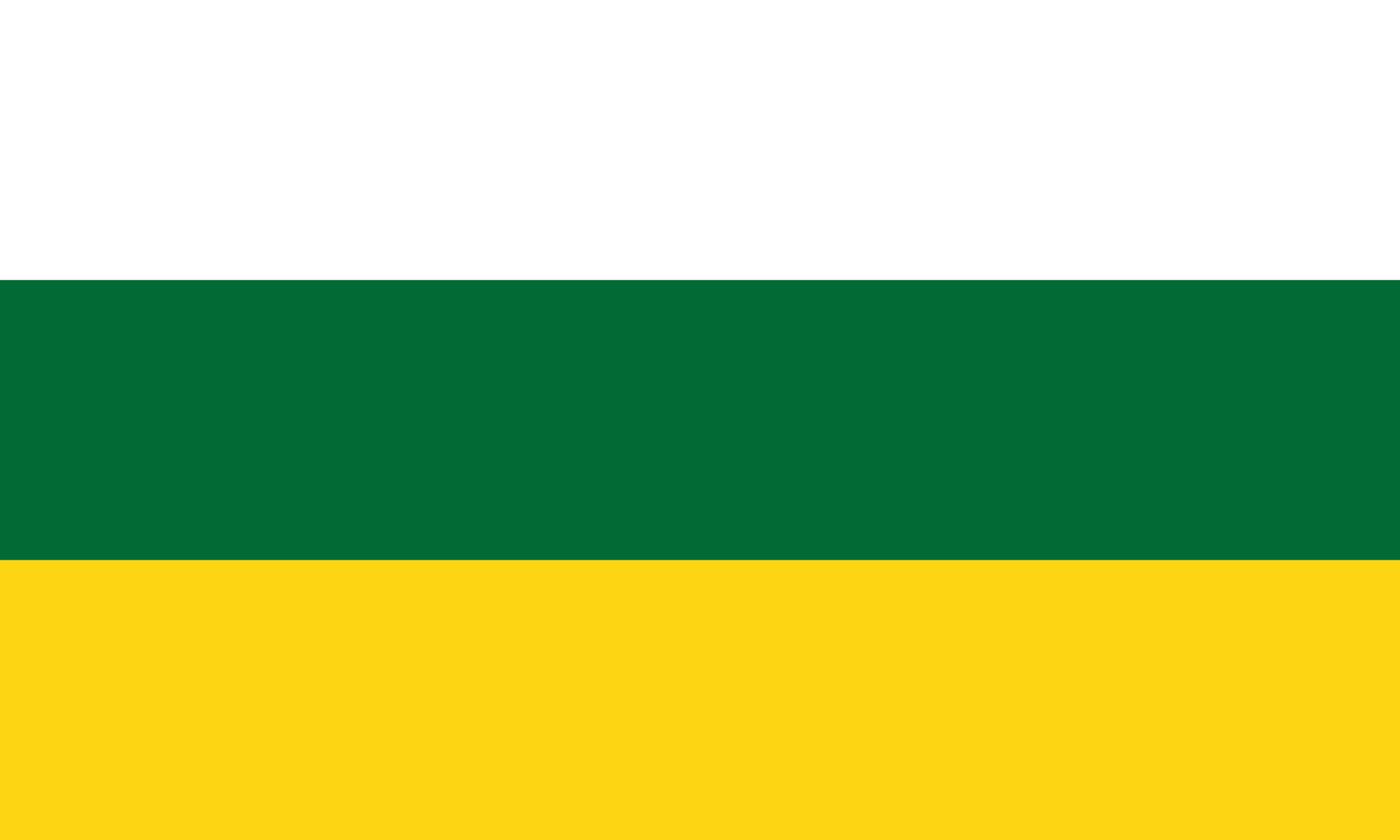
Flag
Barranquitas' flag features green, white, and gold horizontal bands, representing the municipality's fertile mountains, peace, and agricultural prosperity.
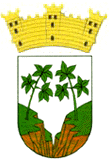
Coat of Arms
The coat of arms features mountains, trees, and agricultural symbols, reflecting Barranquitas' coffee-growing heritage and natural beauty. The mural crown identifies it as an incorporated Puerto Rican municipality.
Anthem
The municipal anthem celebrates Barranquitas' mountain landscapes, history, and the affection its residents have for their hometown. Frequently performed during civic celebrations and the Fiestas Patronales, it expresses the pride of generations of Barranquiteños and honors the municipality's cultural and historical legacy.
Aquí, en el Centro de Mi Corazón....
Human & Capital Resources
Economy
Barranquitas has traditionally relied on coffee cultivation, agriculture, and small family-owned businesses. Today, tourism also plays an increasingly important role, with visitors drawn to the municipality's scenic mountain landscapes, artisan culture, historical museums, and outdoor recreation. Retail, education, public services, and hospitality complement the local economy while preserving the town's rural character.
Education
Barranquitas provides students with access to quality public and private schools that serve the municipality from elementary through high school. Known as the "Cradle of Próceres" for its rich history and notable leaders, the town has long placed importance on education and community development.
For higher education, residents benefit from the nearby Inter American University of Puerto Rico – Barranquitas Campus, which offers associate, bachelor's, and graduate degree programs in business, education, psychology, criminal justice, social work, and information technology. The campus also provides continuing education and professional development opportunities, making it an important educational resource for Puerto Rico's central mountain region.
Students also have convenient access to universities in neighboring municipalities such as Aibonito, Cayey, and Caguas, ensuring a wide range of academic, technical, and professional programs while enjoying the peaceful lifestyle of Puerto Rico's interior mountains.
Demographics *
Population
28,983
Land Area: 34.25 sq mi
Density: 818.2 per sq mi
Median Age: 37.5
Sex: 51% female
Economics **
$9,187
Median household income: $18,924
Puerto Rico: $21,058
Persons below poverty line: 53%
Housing, families and educational attainment *
Number of households
8,829
Housing units density:
333 (2013)
Persons per household: 3.14
High school grad or higher: 73.8%
Marital status: 38% married
* U.S. Census Bureau 2020 data, unless otherwise noted - Source: Quick Facts Puerto Rico.
** U.S. Census Bureau 2016-2020
Map References
Coordinates: 18.1867° N, 66.3064° W
ZIP Code: 794
Driving Distance from San Juan: 40.7 miles
Driving Time: 1 hour, 24 minutes
Frequently Asked Questions
What is Barranquitas known for?
Barranquitas is known for its mountain scenery, historic connection to Luis Muñoz Rivera and Luis Muñoz Marín, artisan traditions, scenic roads, and nearby San Cristóbal Canyon.
Is Barranquitas worth visiting?
Yes. Barranquitas is a rewarding destination for visitors interested in Puerto Rican history, mountain landscapes, local cuisine, crafts, and quieter towns beyond the coast.
How far is Barranquitas from San Juan?
Barranquitas is roughly 45 miles from San Juan. Driving time is commonly about 75 to 90 minutes, depending on traffic and the route taken.
What are the best things to do in Barranquitas?
Popular experiences include visiting Casa Museo Luis Muñoz Rivera, exploring the town plaza, driving sections of the Panoramic Route, browsing local artisan work, and arranging a guided visit to San Cristóbal Canyon.
When is the best time to visit Barranquitas?
December through April generally brings cooler temperatures and somewhat drier conditions, although Barranquitas can be visited throughout the year.
Do I need a car in Barranquitas?
A car is strongly recommended because many attractions, restaurants, overlooks, and nearby natural areas are spread throughout the mountainous municipality.
Did You Know?
According to the 2000 Census, 60.0% of the population attained a high school degree or higher level of education, and 18.3% has a bachelor's degree or higher.
Get Our Newsletter
Discover new places, local flavors, upcoming events, cultural stories, and some of our favorite finds from around the island.Read the Latest ¡La Isla! Newsletter
Follow Along


