
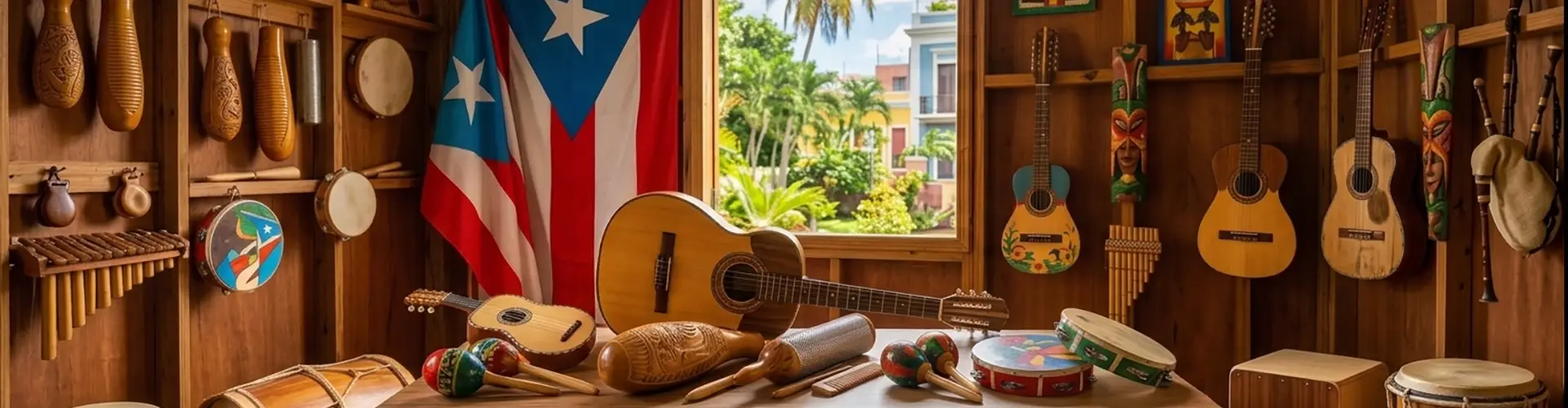
Celebrating Puerto Rican Heritage
National Hispanic Heritage Month is observed in the United States from September 15 through October 15, honoring the histories, cultures and contributions of Americans with roots in Spain, Mexico, the Caribbean, Central America and South America. The observance began as Hispanic Heritage Week in 1968 and was expanded to a month in 1988.
For Puerto Ricans, heritage is a story shaped across centuries. Taíno roots, Spanish colonial history, African heritage, Caribbean traditions, migration, music, food, language and family have all contributed to a culture that is unmistakably Boricua.
During Hispanic Heritage Month, explore some of the people, places, traditions and stories that help tell Puerto Rico's story—both on the island and wherever Puerto Rican communities have made a home.
Our Roots: The Cultures That Shaped Puerto Rico
Puerto Rican culture cannot be traced to a single source. It developed through the meeting—and often the conflict—of Indigenous, European and African peoples, followed by centuries of migration and cultural exchange across the Caribbean and beyond.
Taíno Heritage
Long before the arrival of Europeans, Indigenous peoples inhabited Puerto Rico. The Taíno left a lasting imprint on the island's identity, from archaeological sites and petroglyphs to words still heard today.
Puerto Rican place names such as Utuado, Mayagüez, Caguas and Humacao reflect Indigenous linguistic roots, while words such as hamaca, huracán and barbacoa entered Spanish and later other languages.
Today, Taíno heritage is remembered through museums, archaeological sites, ceremonial centers, art, family traditions and a growing interest in the island's Indigenous past.
African Heritage
African heritage is fundamental to Puerto Rican culture. Enslaved Africans were brought to the island during Spanish colonial rule, and their descendants helped shape Puerto Rico's music, dance, food, language, religious traditions and community life.
Nowhere is that influence more visible than in musical traditions such as bomba and plena. Smithsonian Folkways describes both as percussion-driven Puerto Rican traditions with strong African roots; bomba reaches back to the colonial era and developed from traditions brought by enslaved Africans.
Communities such as Loíza remain especially important centers of Afro-Puerto Rican heritage.
Spanish & European Influence
More than four centuries of Spanish rule also profoundly shaped Puerto Rico. Spanish became the island's dominant language, Catholic traditions became deeply embedded in community life, and Spanish influences can still be seen in architecture, festivals, music, food and municipal traditions.
European migration did not stop with Spain. Corsican, French, Irish, German and other immigrants also contributed to Puerto Rico's economic and cultural development, particularly during the 19th century.
The People of Puerto Rico
Puerto Rican heritage is ultimately carried by people.
Writers, musicians, scientists, athletes, artists, educators and community leaders have carried Puerto Rican identity far beyond the island. Some became internationally known, while many others transformed their communities without ever becoming household names.
Puerto Ricans Who Made Their Mark
Puerto Rico has produced influential writers, musicians, athletes, scientists, artists, and performers whose work has reached far beyond the island. Here are a few notable Puerto Ricans whose contributions continue to shape culture, history, and public life.
Julia de Burgos
1914–1953 · Poet · Carolina
One of Puerto Rico's most celebrated poets, Julia de Burgos wrote about identity, freedom, womanhood, love, and social inequality. Her work remains an important part of Puerto Rican and Latin American literature.
Roberto Clemente
1934–1972 · Baseball Player & Humanitarian · Carolina
Roberto Clemente became one of baseball's greatest players and an enduring Puerto Rican icon. His humanitarian work throughout Latin America became an equally important part of his legacy.
Rita Moreno
Born 1931 · Actor, Singer & Dancer · Humacao
Born in Humacao, Rita Moreno built a celebrated career across film, television, and theater and became one of the most recognized Puerto Rican performers in American entertainment.
José Ferrer
1912–1992 · Actor & Director · Santurce
José Ferrer became the first Puerto Rican actor to win an Academy Award and built a distinguished career as an actor and director in theater, film, and television.
Antonia Novello
Born 1944 · Physician · Fajardo
Dr. Antonia Novello became the first woman and first Hispanic person to serve as Surgeon General of the United States, making history in public health and medicine.
Rafael Hernández Marín
1892–1965 · Composer · Aguadilla
One of Puerto Rico's most important composers, Rafael Hernández Marín wrote hundreds of songs that became part of the island's musical heritage and were performed throughout Latin America.
Meet More Famous Puerto Ricans →
The Sound of Puerto Rico
Music may be one of the clearest ways to hear Puerto Rico's history.
The island's musical traditions reflect Indigenous, African, Spanish, Caribbean and later international influences. Over time, those traditions evolved into sounds that became central not only to Puerto Rican culture, but to Latin music around the world.
Bomba
One of Puerto Rico's oldest musical traditions, bomba is built around the conversation between dancer and drummer. Its roots are strongly connected to Afro-Puerto Rican communities and the experiences of enslaved Africans during the colonial period.
Plena
Often called Puerto Rico's musical newspaper, plena traditionally used song to tell stories about daily life, neighborhoods, politics and current events.
Salsa
Puerto Ricans played a major role in the development and international popularity of salsa, particularly within Puerto Rican communities in New York City.
The Cuatro
The Puerto Rican cuatro is one of the island's most recognizable traditional instruments. Its bright, distinctive sound appears in jíbaro music, Christmas aguinaldos and other folk traditions.
Reggaetón
Puerto Rico also became one of the major centers in the development and global expansion of reggaetón, demonstrating how Puerto Rican musical culture continues to evolve.
Explore Puerto Rican Music & Instruments →
Taste Our Heritage
Food tells Puerto Rico's history in another way.
Puerto Rican cooking combines ingredients, techniques and traditions that reflect Indigenous, Spanish, African and Caribbean influences. Recipes passed between generations have become part of everyday life, holidays and family celebrations.
Fried green plantains mashed with garlic and traditionally combined with chicharrón or other ingredients. Mofongo reflects the strong influence of plantains and African culinary traditions on Puerto Rican cuisine.
A labor-intensive holiday favorite made from a seasoned masa—often based on green bananas, root vegetables or plantains—filled with meat and wrapped in banana leaves.
Alcapurrias, bacalaítos, sorullitos and other fried snacks are part of the island's roadside and beachside food culture.
A silky coconut pudding traditionally flavored with cinnamon and especially popular during the Christmas season.
Rice with pigeon peas is one of Puerto Rico's best-known dishes and a staple at family gatherings and holidays.
Coffee has been cultivated in Puerto Rico for centuries and became one of the island's most important agricultural industries in the 19th century. The mountain interior remains home to working coffee haciendas and a strong local coffee culture.
Traditions That Bring People Together
Puerto Rican traditions are often built around family, neighborhood and community.
Fiestas Patronales
Municipal patron saint festivals combine religious tradition with music, food, rides, artisans and community celebration.
Three Kings Day
Día de Reyes on January 6 remains one of Puerto Rico's most cherished holiday traditions, particularly for children and families.
Christmas & Parrandas
Puerto Rico's Christmas season is famous for music, food, family gatherings and spontaneous musical visits known as parrandas.
Vejigantes
Colorful vejigante masks and costumes appear at festivals such as the Fiesta de Santiago Apóstol in Loíza and Carnaval de Ponce.
Santos
Traditional carved religious figures known as santos are an important Puerto Rican folk-art tradition, often representing saints, the Three Kings and other religious subjects.
Explore Puerto Rican Traditions →
Puerto Rico, Town by Town
One of the best ways to understand Puerto Rican heritage is through its 78 municipalities. Each town has its own stories, foods, festivals, landscapes and traditions.
Loíza
Afro-Puerto Rican Heritage
Known for bomba, traditional vejigante masks, the Fiesta de Santiago Apóstol and a strong Afro-Puerto Rican cultural identity.
Jayuya
Taíno & Mountain Heritage
Jayuya is closely associated with Puerto Rico's Indigenous heritage and is home to archaeological sites, Taíno imagery and mountain traditions.
Ponce
Art, Architecture & Music
Known as La Perla del Sur, Ponce has played an important role in Puerto Rican art, architecture, music and civic history.
Lares
Coffee & History
The mountain municipality is closely connected to Puerto Rican coffee culture and the 1868 Grito de Lares uprising.
Explore Puerto Rico's 78 Municipalities →
Puerto Rico Beyond the Island
Puerto Rican heritage did not remain within the island's shores.
Migration created large Puerto Rican communities across the mainland United States, particularly in cities such as New York, Philadelphia, Chicago and communities throughout Florida, Connecticut, Massachusetts, New Jersey and other states.
These communities carried Puerto Rican music, food, language and traditions with them while creating new expressions of Boricua identity.
Explore Puerto Rican Life in Georgia →
Why Hispanic Heritage Month Begins September 15
Hispanic Heritage Month does not follow a calendar month. The celebration begins on September 15, which coincides with the independence anniversaries of Costa Rica, El Salvador, Guatemala, Honduras and Nicaragua. Mexico celebrates its independence on September 16 and Chile on September 18.
The U.S. observance began as Hispanic Heritage Week in 1968 and was expanded to the current September 15–October 15 period in 1988.
A Personal Note
Puerto Rican heritage is more than history to me. It is the language I grew up speaking, the food I remember, the traditions my family celebrated, and the places and people that shaped who I am.
When I created Welcome to Puerto Rico in 1994, the internet looked very different, but the purpose of the site was simple: to share Puerto Rico with people who wanted to learn about the island.
More than three decades later, that purpose remains the same.
Hispanic Heritage Month gives us an opportunity to celebrate Puerto Rican contributions to the broader Hispanic story, but Puerto Rican heritage is something we live, preserve and continue creating every day.
Continue Exploring Puerto Rico
Culture & Traditions
Discover Puerto Rico's music, food, festivals, holidays and cultural traditions.
People of Puerto Rico
Meet Puerto Ricans who have made their mark in the arts, sciences, sports, public life and beyond.
Cities & Towns
Explore the history, attractions, traditions and people of Puerto Rico's 78 municipalities.
Frequently Asked Questions
When is Hispanic Heritage Month?
National Hispanic Heritage Month is observed in the United States from September 15 through October 15 each year. It celebrates the histories, cultures, and contributions of Americans whose heritage is connected to Spain, Mexico, the Caribbean, Central America, and South America.
Why does Hispanic Heritage Month begin on September 15?
September 15 marks the independence anniversaries of Costa Rica, El Salvador, Guatemala, Honduras, and Nicaragua. Mexico celebrates its independence on September 16, followed by Chile on September 18.
How does Puerto Rico fit into Hispanic Heritage Month?
Puerto Rico is a Spanish-speaking Caribbean island with a rich cultural heritage shaped by Taíno, African, Spanish, Caribbean, and other influences. Hispanic Heritage Month provides an opportunity to recognize Puerto Rican history, culture, and the contributions of Puerto Ricans on the island and throughout the United States.
What are the main cultural influences on Puerto Rican heritage?
Puerto Rican culture developed from many influences, with Taíno Indigenous heritage, Spanish colonial history, and African heritage playing particularly important roles. Centuries of migration and cultural exchange with the Caribbean, Latin America, Europe, and the United States have continued to shape Puerto Rican identity.
What are some important Puerto Rican cultural traditions?
Puerto Rican traditions include music and dance such as bomba and plena, Fiestas Patronales, Christmas parrandas, Three Kings Day, traditional santos and vejigante art, and family celebrations centered around Puerto Rican food and music.
What foods are part of Puerto Rican heritage?
Puerto Rican cuisine reflects the island's diverse cultural history. Popular foods include mofongo, arroz con gandules, pasteles, lechón, alcapurrias, bacalaítos, tembleque, and other dishes that combine ingredients and culinary traditions developed over generations.
What music originated in Puerto Rico?
Puerto Rico is the birthplace of musical traditions such as bomba and plena and has played an important role in the development and popularity of salsa and reggaetón. Traditional jíbaro music and instruments such as the Puerto Rican cuatro are also important parts of the island's musical heritage.
What does Boricua mean?
Boricua is a term Puerto Ricans commonly use to describe themselves and their Puerto Rican identity. The word is derived from Borikén or Borinquen, names associated with the Indigenous Taíno name for the island.
Where can I experience Puerto Rican heritage?
Puerto Rican heritage can be experienced throughout the island in museums, historic districts, archaeological sites, festivals, music and dance performances, restaurants, artisan workshops, and local communities. Places such as Loíza, Jayuya, Ponce, San Juan, and Lares each offer different perspectives on Puerto Rico's cultural history.
Is Puerto Rican heritage celebrated only during Hispanic Heritage Month?
No. Hispanic Heritage Month provides a special opportunity to recognize Puerto Rican contributions within the broader Hispanic experience in the United States, but Puerto Rican culture, traditions, history, and identity are celebrated and preserved throughout the year.
Did You Know?
Because Puerto Rico is not a state, it has no senators or representatives in Congress.
Get out Newsletter
Discover new places, local flavors, upcoming events, cultural stories, and some of our favorite finds from around the island.Read the Latest ¡La Isla! Newsletter →
Follow Along


